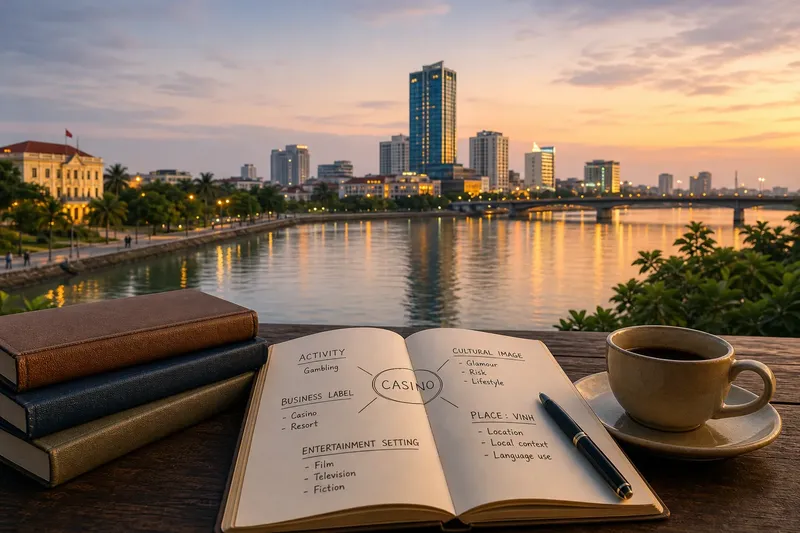
Why Vinh Casino Captions Need More Than a Place Name
Vinh casino captions can connect a picture to local language and place while showing readers what the image actually says—and what it leaves unsaid.
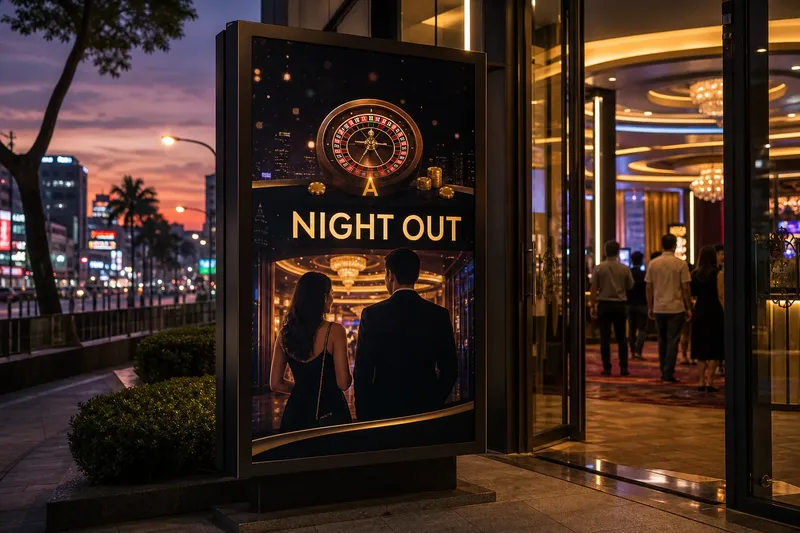
What should a Vinh casino caption tell you beyond where a picture was made? It can explain how a sign, phrase, or image frames gambling in the city, without pretending that one frame speaks for everyone who lives there.
That distinction matters because public language does more than label a venue. Words such as “entertainment,” “leisure,” or “luck” offer a particular account of casino culture; a caption can identify that account and leave room for the history and social meanings it does not contain.
Read the public language
Start with the words visible in the image. A sign, advertisement, or headline may name a venue or use language designed to attract attention. Quote or paraphrase only what can be read clearly, and distinguish the wording from the editor’s description.
For a caption about an image from Vinh, the distinction might be between “a sign uses the word ‘entertainment’” and “the venue is entertainment.” The first reports a public message; the second adopts its framing. That is a small grammatical shift with a fairly large editorial footprint.
Place the wording
Vinh is not merely a label to attach to any image of a casino. If the image is tied to the city, say how that connection is established in the material available to the editor. If it is a general illustration, avoid phrasing that makes it look like a record of a particular street or venue.
Language also travels through different settings: a storefront sign addresses passersby, a promotional graphic addresses potential visitors, and a news image may serve an account of public life. Naming the setting helps readers understand the intended audience rather than treating every casino image as the same kind of statement.
Separate message and meaning
A caption can explain what an image presents without claiming that the presentation reflects local opinion. “The graphic frames the venue as a place for leisure” describes its pitch. “People in Vinh see gambling as leisure” makes a broader claim that the graphic cannot establish.
Say you are editing an invented image supplied with a note that it was made for a casino in Vinh. The graphic shows a doorway and uses the phrase “a night out.” You caption it, “A promotional graphic for a casino in Vinh presents a visit as ‘a night out.’” Readers can see the venue’s chosen language; the caption does not turn that language into a description of residents’ habits.
Caption decisions
Before publication, make each decision from what the image and its accompanying information actually provide:
- Check whether a word or phrase is legible; if it is, quote it accurately, and if it is not, describe the visible text without guessing.
- Check whether the image is connected to Vinh in the supplied material; if that connection is established, name the city, and if not, describe the image without assigning it a location.
- Check whether the image is an advertisement or another kind of material; if its purpose is identified, state that purpose, and if it is unclear, avoid calling it promotional.
- Check whether a caption turns an organization’s wording into a statement of fact; if it does, attribute the wording to the image or its source, and if it does not, retain the narrower description.
- Check whether the caption makes a claim about residents’ attitudes or behavior; if the article supplies reporting for that claim, attribute it appropriately, and if not, remove the claim.
- Check whether a translation is supplied or verified; if it is, identify the translated wording as such, and if it is not, do not present an uncertain rendering as exact text.
Questions about Vinh captions?
Should a caption translate a sign?
Translate it only when the wording has been checked by someone qualified to handle the language in context. If the translation is uncertain, report that the sign contains text and avoid supplying a confident English version.
Can a caption explain a slogan?
It can describe the message the slogan promotes, such as leisure or entertainment, while making clear that this is the image’s framing. A slogan does not, by itself, establish how the public receives it.
How should an editor describe local attitudes?
Keep claims about local attitudes tied to reporting that supports them, and attribute them to the people or material involved. If the available source is only an image, leave the broader claim out.
What if the image lacks context?
Use a caption limited to what is visible and to any connection that the supplied information establishes. If the missing context is essential to the story, request it or use an image that can be described accurately.
Keep the frame honest
Useful Vinh casino captions make the relationship between public language and place legible: they identify whose message appears, what it says, and how it relates to the story. They do not need to turn a sign into a verdict on the city.
When a phrase carries a meaning that depends on local usage, a brief, verified explanation can do more than another adjective about the building. If that explanation is unavailable, leave the phrase in its proper frame: words used by a particular image or venue, not a summary of Vinh.