How Screen Stories Use the Casino Image
Read casino scenes linked to Vinh through a character’s family, work, and travel, and see how those ties shape the scene without turning fiction into local evidence.
What does a casino scene linked to Vinh tell you about the character’s life beyond the gaming room? In a screen story, the casino image can gather family obligations, work, travel, and social pressure into one place, but those details matter only if the scene gives them a role.
Vinh in the plot
A character’s connection to Vinh can shape a casino visit through relatives, a job, or a reason to leave town. If those ties continue to affect the character inside the venue, the setting becomes part of the plot rather than a label attached to an arrival shot.
Look for the precise link: who expects the character home, who arranged the trip, and what obligation competes with the game. A scene need not pause for a tour of the city; one consequential relationship can do more than a string of recognizable landmarks.
Language and relationships
Forms of address, names, and conversational habits can suggest how characters know one another. Their meaning depends on who uses them and what changes after the exchange, not on a single phrase being treated as proof of local authenticity.
Subtitles and dubbing may smooth distinctions in tone or familiarity. Compare the translated line with the scene’s reactions: a pause, a correction, or a shift in who answers can preserve social information even when the wording does not.
Work and travel
A casino may enter a story through a character’s job, an invitation, or a journey with someone else. That angle can make the venue a workplace or a stop along a route, not merely a symbol of gambling.
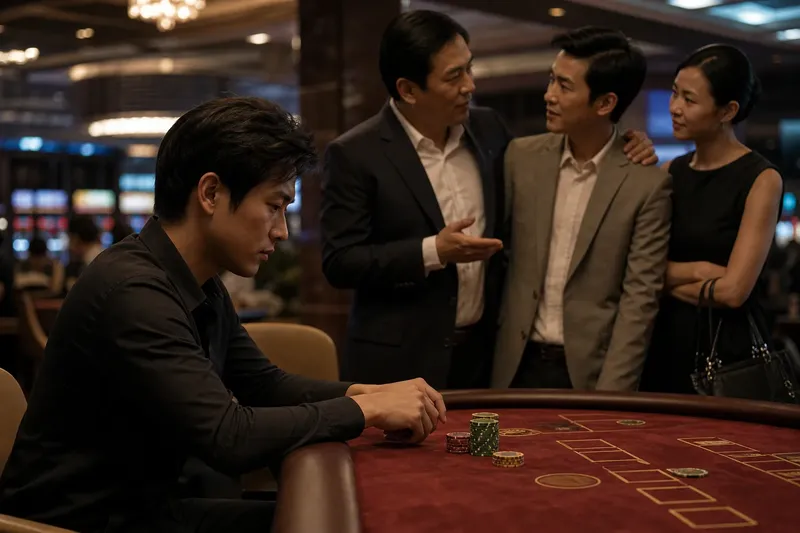
Say an invented drama begins with a restaurant worker from Vinh finishing a shift and receiving an invitation from a cousin traveling to another city. The worker goes along, recognizes the cousin’s formal introduction to an acquaintance, and declines to join the game; the scene then shows the cousin leaving alone while the worker waits by the exit. The observable result is a changed family exchange, not a claim about how people in Vinh behave. The story’s emphasis falls on the cost of refusing a relative’s request, while travel and work explain why the character is there.
Screen choices
A close view of a player’s hands can emphasize a private decision; a cut to companions watching can shift attention toward reputation or pressure. Sound and editing guide the viewer toward those relationships, though they do not establish the scene’s location by themselves.
What is not worth the effort is assigning local meaning from decorative cues alone. Red carpeting, formal clothes, or dramatic music may set a mood, but without a plot connection they offer little basis for reading Vinh into the scene.
Questions about casino scenes?
How does Vinh shape the casino scene?
Track a tie that remains active inside the venue, such as a family expectation, work connection, or reason for travel. If none affects what the character does, Vinh may function mainly as background or biography.
Can dialogue establish local identity?
Dialogue can signal familiarity or distance, but a phrase alone cannot establish a character’s whole social world. Notice who understands it and whether the exchange changes a decision or relationship.
Why show companions watching?
Observers can turn a personal choice into a social performance by adding approval, embarrassment, or pressure. Their reactions also reveal which relationship the scene wants the audience to follow.
Can fiction document life in Vinh?
A fictional scene can portray a place, but its dramatic purpose differs from documentation. Treat its details as choices within that story unless separate context supports a broader claim.
Reading consequences
To interpret a casino scene connected to Vinh, follow the character’s relationships from the journey to the decision at the table or the refusal to sit down. The useful question is what changes between the people involved, not whether the room looks convincingly grand.
Notice what the character carries out of the venue: a promise, a strained exchange, or an unchanged routine. That consequence gives the scene a specific social meaning and keeps the casino image attached to the character’s life rather than to a general idea of the city.